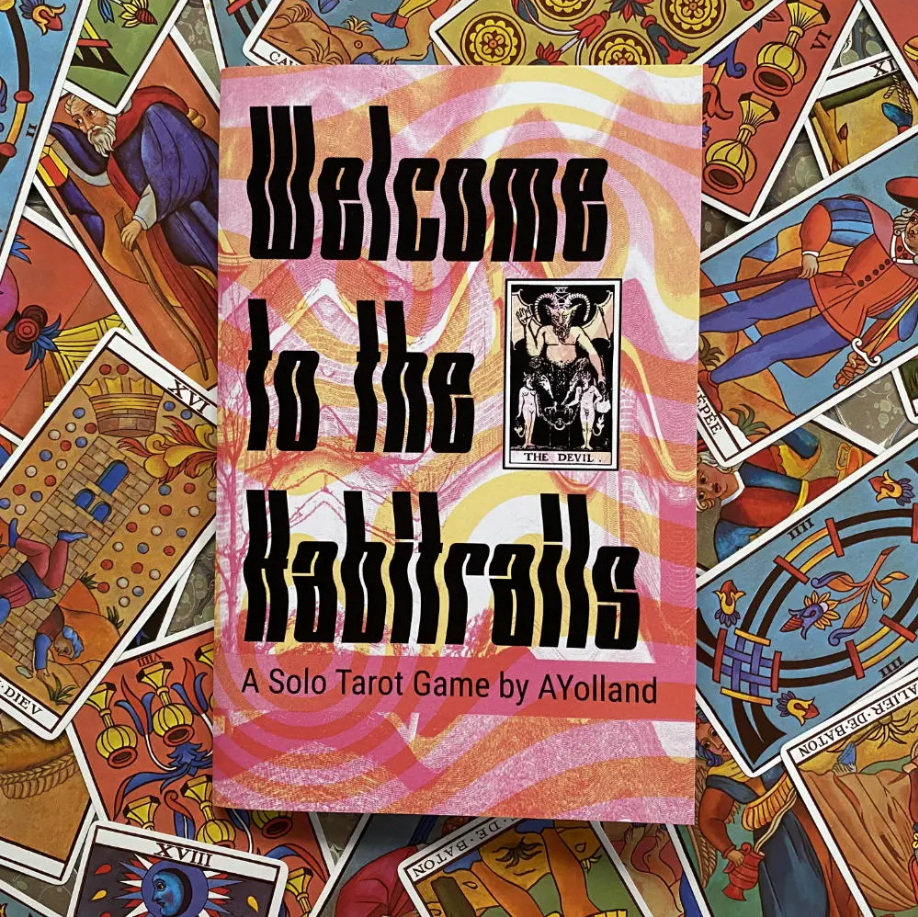
Wednesday, May 14, 2025

Don't Make A Journey Without Knowing Where The Road Leads: Ryuutama & Wanderhome

 tl;dr


    It seems somewhat counterintuitive to drop this at the beginning since it goes about trying to prove my point via blunt force trauma, but perhaps that's the best place to start: I don't think people read critically anymore. Whether due to lack of time, willingness to commit, or just atrophied critical thinking skills, by and large I think that the average TTRPG enjoyer does not take the time to read TTRPGs anymore and therefore will turn to community commentary on a game - which is inherently neither a good or a bad thing, but one that I do believe often leads to misconceptions about games as they must necessarily be filtered through other people's biases before they come to you. 

    The good news is, I think these are all things that can be counteracted. If you're willing to come take a journey with me, then I think I can lead you onto the path towards understanding games better. As luck would have it, there are two games about journeys that I often see conflated that we can thereupon practice our critical reading skills: Ryuutama by Atsuhiro Okada; and Wanderhome by Jay Dragon. This may be setting off alarm bells for some of you - specifically, because Wanderhome is so often recommended in the same context as Ryuutama, incorrectly. To be honest, I don't think anyone but Jay has ever pitched me one of Jay's games properly - that's a blog post for another time, but I think we have to do this one first.

Some Context

    While my current job doesn't quite afford me the privilege of unfettered access to the deluge of podcasts that I once had, I've spent the better part of the last three years mainlining TTRPG review podcasts, and the better part of the last decade consuming (and occasionally being a part of) TTRPG actual plays. Before that, the most common ways I heard about other games were from the experiences of my friends playing games. Since entering the world of games professionally, I've run a lot of games for people at cons who were not in my immediate friend group, often by having to rapidly onboard myself to a system I'd never read. I've also taken to working through my TTRPG backlog by way of forcing coercing cajoling curating and gently encouraging a very specific group of my friends to read through games with me as an act of play in and of itself, and perhaps most relevantly to this blog I also contributed to a Ryuutama zine this year! All of this is to say that I feel like I am a pretty reliable resource to make the kinds of claims I'm going to make in this post, but since part of the point of this post is learning to examine biases both of yourself and others, I feel like this is an important thing to include here! Ultimately, I am just some sicko on the Internet, just as you are. Suffice it to say that the advice I'm about to present is ALSO useful for evaluating this very article as you read it, so feel free to chug a Monster Zero and get that brain meat jiggling.

Pattern Recognition & Data Synthesis

    I do not think it is a particularly hot take to say that we humans love us some good old fashioned pattern recognition. We love to associate things with things we already know - it makes the world more digestible, and being able to assign context to new situations allows us to function. A lot of the time, this kind of data serves us well enough to get by - so much of the time, in fact, that it becomes very easy to just rely on this with no further consideration to the conclusions we jump to. Not to belabor a very obvious point here, but like, just going off of this data is kind of exactly the situation we run into with both AI and hurtful stereotypes of all kinds - if you don't consider the data you have received and just take it at its face value, you've done at the very least yourself a disservice and depending on what position of authority you hold to other people, that disservice may become damage to many other folks.

    As much as I would love to make my English degree worth more than the paper it was printed on by way of explaining all the ins and outs of how to synthesize data and evaluate sources, that would make this blog as long, dry, and interesting to read as a CVS receipt so I'm going to skip around a bit: You have, almost certainly, heard of primary and secondary sources. In the context of what we're looking at here, a primary source would be an RPG text itself, whereas a secondary source would be a review of a game. Blog posts by the creator of the game about the game itself are kind of a nebulous area outside of these two classifications - they are technically primary sources, but can sometimes be secondary sources depending on the content - especially as it starts bleeding out into author interviews, etc. It's not really important right now that we categorize this thoroughly, but I need you to have at least this as a starting point for where we're going so that you're thinking about how tightly tied to the core concept of a game a source may be. It may be more helpful to you to consider things as a spectrum of direct and indirect sources - a direct source being the RPG text itself, an indirect source being someone with no relationship to the game voicing their opinions about it, and everything else somewhere in-between. 

    So. You, dear reader, likely have sources you like to go to for content about games. You might just talk to people on Discord about it, or you're reading horror stories on Reddit, or you're watching nerdy-ass voice actors play the game on Twitch, or you've assembled a group of friends to talk about games in person, or maybe you like to listen to a pair of disembodied hands flipping through a game and talking about the ways a game may or may not be compatible with the owner of those hands' own game system. Whatever floats your goat - but the point is, these are all functionally secondary sources to the actual text itself. These are extremely valuable resources, each in their own ways, but each with their own pitfalls as well. For a brief and noncomprehensive list, here's some hits:

Watching/Listening To People Play On A VOD/Podcast
  • Pros: Getting to see the actual gameplay mechanics at work; being able to see a demonstration of how the game actually works; getting a good idea of pacing and timing for when to do certain things in the game; learning what parts do and don't chafe that group to potentially plan for those things in your own group

  • Cons: Gameplay made As Content (TM) is often heavily edited not presenting an accurate depiction of how a game plays at the table; differing levels of skill as performers vs your home group; unclear what things are houserules that group has implemented vs what is in the text; otherwise unrealistic expectations of how easy or difficult the game is to pick up as a player/GM
Forum Posts
  • Pros: extremely accessible; easily see multiple viewpoints on a topic; people motivated to speak on a subject in a forum are almost certainly passionate about that topic

  • Cons: inevitable and extreme bias; unable to tell if people are voicing original thoughts or parroting things they've heard elsewhere without interacting with the game at all
Online Reviews
  • Pros: someone has taken the time to thoughtfully lay out their reaction to a game; biases are often disclosed and repeated entries may allow savvy consumers to predict how a reviewer may interpret something; often presented in an easily digestible form to deliver information quickly

  • Cons: potential for unethical journalism; obvious bias may prevent accurate coverage of a game; people who do not like a game often do not give it the same kind of care and coverage of a game that they do enjoy whether they take pains to mitigate their bias or not
Reading and Playing a Game With Your Friends
  • Pros: You are directly digesting the text as intended; you and your group will form your own decisions based on your own experiences

  • Cons: Cognitive load for learning a new system; conscious and unconscious biases may prevent you from enjoying the game before giving it a fair shake; nerds are afraid of change and attempting to get them to learn a new game rather than just play the thing they already like may provoke nerd rage
    In a perfect world, you would do all of these things to fully understand a game. But the thing is, of course, that a lot of the time you're not going to be approaching games from an academic standpoint - sometimes your decade long D&D group has exploded and now you're on the hunt for a new game for that group of friends and have to try and sell them on something new, so you've gotta figure out what to play next with not a lot of time. How do you figure out what a game is actually like, and what do you do when you start playing something and realize it's not what you wanted? And what does all of this have to do with Ryuutama and Wanderhome, or that other thing at the beginning of this article about people not reading?

Natural Fantasy Roleplaying

    To completely jump away for a moment, let's talk about Fabula Ultima. Fabula Ultima is an homage to classic JRPG videogames, and as of March of this year has released three total setting guides to help you dial in the flavor of your story - beyond the content in the main guide, you have the Atlas: High Fantasy for games geared towards epic magical quests to attack and dethrone god, Atlas: Techno Fantasy which is more about the struggles between capitalism corrupting the environment and co-opting natural resources and the people who have to fight back against it (the whole Final Fantasy 7 situation, you know the deal), and most recently Atlas: Natural Fantasy which to quote directly from the DriveThruRPG page "...bring[s] you into worlds deeply permeated by the cycles of time and nature, where young heroes face the consequences of past mistakes and demonstrate that history does not have to repeat itself, creating a brave future of coexistence[.]" Ryuutama is likely the game that got the term "natural fantasy roleplaying" in the ears of gamers in the West, and given Fabula Ultima's definition thereof you could probably argue that Wanderhome fits into this category as well. There are, in fact, a staggering number of similarities between Wanderhome and Ryuutama, some of which are brought up more often than others. Superficially, they are both games with very cute art where you create a group of travelers that are not traditional RPG combatant types, they're both games intended to foster collaboration between the players and GM with a robust set of options for building out towns and festivals and which care heavily about the seasons and how those affect the characters, and most importantly the characters are learning about themselves as they help people along their journey. Less superficially, they're both written by people with backgrounds in teaching and specifically teaching games to newer players meaning that they feature language intended to be easily consumed and with broadly simple character mechanics, plus they're both doggedly committed to making sure that everyone at the tables knows that the journey is the point of playing.

    The issue is, that's where the comparisons basically stop. While both games take great pains to emphasize that they are about telling the story of a journey of people who are just regular folks, Ryuutama still includes combat, meaning that it expects players to interact with the world through violence despite trying to indicate otherwise. Wanderhome all but explicitly forbids violence - the one character able to commit an act of violence must be removed from play immediately after doing so - and predominantly expects players to affect the narrative directly. What this means, then, is that while both games are interested in telling a story of a journey, how each game defines what a journey is is wildly different. 

    The journey you take in Ryuutama is one where your Great Journey is one where you must Accomplish Something and you do so by way of your Skills And Might despite being just a regular person in the world. The story you tell in Ryuutama is quite literally in-game being recorded by a DMPC who will then feed that story to a great dragon, and so wants the characters to Do Great Deeds and push them beyond their normal humdrum life to make sure it's a good story. It's focused on DOING. And once the characters have finished DOING, then they are done, and the journey is over.

    The journey in Wanderhome is just that - a journey. Characters may come and go during the journey. They do still have goals to achieve and can affect the world in material ways, but since violence is not an answer, all the actions your characters can take focus around being present in the moment and practicing compassion. When a character accomplishes a goal, or when it feels appropriate, that character may leave and another may take their place, and the journey continues. Wanderhome is a story of BEING. Wanderhome asks you to BE with the characters for a while - for you to BE the town, to BE the landscape, to BE the NPCs. Wanderhome wants the players simply to BE the journey until they are satisfied and move on, just like the characters they play.

But What Does It All Mean, Basil?

    If you were pressed for time and listened to someone tell you about the basic premise of Wanderhome and Ryuutama and you drew the assumption that they were similar games because they're both nature-focused, travel-focused games with easy-to-learn mechanics, you would be correct - they are both that. However, you would also be completely wrong, because without an understanding of how each of those games want players to interact with the narrative, you cannot understand what each of those games will be. This, I think, is the major issue people have with trying to interact with any new RPG, and why I brought up how frustrating the lack of critical media consumption is - it seems as though people lack anything but the most baseline curiosity, and so when they find out about something new they try and immediately sort that game into a box with things they already know rather than making any kind of attempt to meet the game where it is and see what it actually wants you to do. In some ways, this lack of curiosity also leads to people trying to shoehorn their favorite games into being things that they are not because the intent of the existing mechanics encourages a specific kind of play which usually does not jive with whatever the new intent is which leads to either bad play experiences for everyone or the birth of new game designers, but I feel like that's a drum I beat in every article here  and I don't really need to go into that right now. The point is, people will do literally everything in their power to make assumptions about a game rather than try to figure out what the game actually is, and then are often upset or confused when they find the game is not what they assumed it would be.

    Frankly, I think that sucks. So.

    Let's imagine that spectrum of sources I mentioned earlier for a moment. Let's say someone told you about a game that for whatever reason piqued your interest. You're not sold on it enough to just go out and buy the book and read it, so what do you do? Here's my quick and easy tips:

  • If "the book itself" is one side of the spectrum and "random person sharing thoughts about a game" is the other side of the spectrum, start near the middle: try to find an interview with the designer of the game and see what they say the intent of the game is.

  • If you're still interested, go one step to either side of center - moving closer to the text itself would be something like looking up development blogs or other posts by the creator about the game, whereas moving farther away would be something like watching or listening to a one-shot of the game being played.

  • If you've gotten this far and you're still hooked, you can now move to the farthest sides of the spectrum - listen to some people review the game itself, and then go read it.
    AND BEFORE YOU START WITH ME, because I can hear you begin to type furiously across the gulf of space and time, what I did not just say was "you should go spend money on something you don't know if you and your friend group will like." There are so, so many legal ways to get games for free if you cannot or don't feel comfortable purchasing a game. You should check with your local library - if it's a more mainstream release, one that has received at least a paperback or hardback printing, most library systems will have at least a copy or two floating around that you can grab via Interlibrary Loans. If it's an indie game and it has an Itch.io page, I would all but guarantee you that the page for the game either 1. has community copies available or 2. the creator of the game would be willing to send you a PDF for you to read - many creators are just happy people are interested in their work. Speaking of Itch, if you are someone who often purchases the charity bundles that pop up, there's a strong chance you might already have the game you're curious about! And perhaps the most critical thing - you should ask your friends if they have a copy of the game they could let you borrow - or, gasp, since they already own it, ask them what they think! Have them run a game for you, or get them to let you run a game for them!

    This blog post got a little more negative than I would have preferred, but at the end of the day I really just want people to feel comfortable critically evaluating things because it is not materially harder to do than what people are already doing - the only difference is actually thinking about the information you take in and how you feel about it to have your own thoughts. Simply absorbing information is not enough - you do sometimes have to use that piece of soggy bacon between your ears.

    Also, you should go play both Ryuutama and Wanderhome. Ryuutama is a great game to bridge the gap between people used to playing turn-based JRPGs into the world of tabletop RPGs. Wanderhome is a great game to bridge the gap from passive players to active storytellers. Both are great tools for your toolkit - you just have to know when to use them.

Stay weird out there.

Sunday, April 20, 2025

What Have I Actually Learned After Escaping The Dungeon(s & Dragons)

 Intro


Context

    If you're new here, the important context for this post is that I played almost nothing but D&D (3.5, then 5e) from the beginning of my time in TTRPGs when I was in highschool (let's say 2005ish) until the time I went to GenCon in 2022. For 15 years, give or take, the Dungeons and Dragons ecosystem was what colored how I saw TTRPGs. There were extremely brief glimpses into other games which were still D&D adjacent - I recall very early on playing the original version of Rolemaster with some grognards at the FLGS, and I had hopped onto (and quickly dropped) Starfinder at its release. I knew ABOUT other games, certainly - Vampire: The Masquerade was that game all the horny weird kids I didn't associate with played (I was the OTHER kind of weird kid, the dual class band/theater kid), Shadowrun was D&D But Cyberpunk, but I had no way to get any of those books and certainly nobody around to play them with.

    Also, quick aside - you're gonna see a lot of links in the rest of this article. None of them are affiliate links, I don't make money from anything, I just want you to have context for what I'm talking about if you find it interesting.

Beginnings of Beginnings

    I don't think I got to play any games at GenCon 2022, but I got to meet a number of my fellow ENnie nominees and learn what they were all about, and that was enough to sell me on quite a few games. I was ahead of the curve on the sea shanty trend, so I was very happy to get my hands on a copy of Shanty Hunters then. My other big purchases were Colostle (a game that I sadly started to flip through and then stopped, which you can read more about in this post), Ryuutama, and the Old School Essentials core set + Halls of the Blood King and The Isle of the Plangent Mage. But it really wasn't until 2023 when I started playing Mothership with my friends at Project Derailed that I really started breaking out into playing other kinds of games. That was also the year I ran Kids on Brooms for Hunters Entertainment at GenCon and ended up meeting Tony Vasinda of PlusOneEXP and learning about the wide world of zine games. When my 8 year long D&D game died in 2024, I knew it was time to start hunting for more. (It also didn't help that I went a little too hard on some crowdfunded games, some of which have wrapped production and have been filling my thoughts as of late, some of them are still on the horizon.) 2024 also marked the year where I started learning about all the blog content I'd missed back from the G+ era and The Forge era of the early 2000s (again, back when I was just getting into RPGs and was fully entrenched in the D&D ecology, shoutout to the Giant in the Playground forums). 

That's A Lotta Words...


Too Bad You Aren't Reading Them

    So like, I get it. You found D&D, or Pathfinder, or one of the other current spinoffs of them and you like to play it and you're like "HELL YEAH BROTHERRR, I'm gonna dedicate all my time getting good at THIS GAME and I'll never need to learn ANYTHING ELSE because my attention span is FINITE." I get it. I was like you, once. The issue is, when you don't venture out beyond the walls of your enclosure, you miss out on how other people are doing things, which means you're missing out on all kinds of inspiration and tools to make your life easier no matter what game you're playing or running. Here are some things I've learned from games that aren't Dungeons & Dragons:

The Clock In San Dimas Is Always Running

    Something I've seen in Yochai Gal's "Beyond the Pale," Micah Anderson & Nate Treme's "The Batrachian Swamps," Brad Kerr's Hideous Daylight  (EDIT: that's what I get for posting late at night, sorry!) and scattered around in watt's "Cloud Empress" books are explanations of the timeline of events of a campaign assuming the PCs don't exist/don't intervene. (Critically, these are for smaller stories - like, one-to-two-shot length, not big massive drawn out campaigns.) Having clear views of what the basic plot of the adventure is means that you've got eyes on the characters' motivations. You don't need to randomly roll encounters as your PCs move around, nor do you have to try to route the characters one way or another. You, as the GM, know the basic plot of what the most important characters in the story want, and so you know where they might be when they players go poking around. Furthermore, you might think that this is just an excuse to railroad the players but personally I find it to be quite the opposite as long as you're not shoehorning that basic plot back in. If, for example, you know that the first day of the story that Bob the Wizard goes to Fantasy Costco to buy a Staff of Plot Importance, but instead the players get to Fantasy Costco first and buy the staff, it's not that the players have ruined the game but rather that you can chart the clear consequences of these actions throughout the rest of the adventure. Maybe Bob the Wizard tries to take the staff from the PCs. Maybe by Bob not having the staff, the big bad guy that's supposed to be released on Day 7 will now stay trapped and instead it will manifest its desires some other way. By having a physical outline of how the plot would go without PC intervention, you can still run the other parts of the simulation in your mind instead of having to randomly bullshit something together at the last minute! It helps!

Only Roll When Failure Is Interesting (But Wait, There's More!)

    One of the things I find in people who played a lot of D&D 3.5 or Pathfinder is that they get rock hard for the extreme simulationism of rolling for every action. "You're climbing the ladder with no time pressure. It's a ladder that will be able to hold your weight and the only way you could fail is by extreme random happenstance. Can you just do it? No! Roll to climb! There's a 5% chance you get a spasm in your back and fall to your death." Now, I think enough time has passed that many of those DMs will glide past the boring parts - unless they're wargamers, in which case, good luck, you're going to roll for every flap of your buttcheek as you do a stealth mission - and this course of action (the skipping past, not the buttcheeks) is something that is made explicit in most games now. Monte Cook's Cypher System games certainly call it out, and I feel like they're the next logical stepping point for people trying to wean off of D&D - between 1. what I refer to as "coupon clipping" where you stack what abilities and items you have at your disposal to numerically try and lower a challenge to 0 which means you don't have to roll for it and 2. the insistence of reducing the mechanics of the system to operate entirely within that system while encouraging you to flavor the actual challenges however you want, if you're playing with a crew who just can't seem to shake the habit of rolling for everything, it provides a mechanized way of going "Ok, it's a Difficulty 1 task. You have a skill that helps. Congratulations, you don't need to roll, can you please stop asking to roll for walking and chewing bubblegum at the same time thankyouverymuch." I think that's a valuable deprogramming tool to teach people the joys of not simulating every single part of the experience.

    What I did not experience until very recently, however, is the idea of not just rolling when failure is interesting, but rather only rolling for what thing is interesting if you fail. This epiphany came thanks to My First Dungeon's interview with Mikey Hamm and Laena Anderson in preparation for this season's game Slugblaster (which Hamm wrote, and which Anderson is a member of the longest running AP podcast of the game, Quantum Kickflip). There's a bit in this interview where they mention the Action Roll, Slugblaster's catch-all "Roll To Do A Thing" roll, and they mention using the Action Roll for things like trying to move your finger two inches to tap your phone because you're tied up, or for things like resolving an entire gang fight. This was, to me, much what I assume it's like to be on those drugs where you experience complete ego death, become one with the universe, and have a brief moment where your consciousness is connected to every other consciousness and suddenly all things become clear. By being willing to go "OK, what part of this interaction is the actually interesting part - is it that you're fighting a giant slug? Or is it that the giant slug is blocking your way to your escape route, so while fighting the slug is a natural consequence of the narrative, the actual interesting part is the challenge it provides as you're escaping?" I think being able to do that kind of in-narrative root-cause analysis to figure out what the actual motivation of the characters in the scene is balanced with what the narrative needs of the players and GM (or Slugmaster, in this case) is absurdly slick, especially considering one of the most consistently frustrating things about D&D (even for people who love the game!) is the absurdly long combats!

Make The PCs' Backstories Matter, But Not Like That

    We all know the stereotypes: Timmy has written a seventy-six page backstory of all the legendary deeds of his Level 1 Ranger which he expects every other player to know and interact with and for the DM to cater to his desire to live out a heroic fantasy; meanwhile, Johnny has scoured the forums for the most optimized build and has exclusively made decisions about his character based on the most mechanically optimal selections - if he bothers to justify anything, it will only be offhandedly in the moment and is generally more interested in playing the build than actually playing a character that engages with the story. I've been both of these people. You probably have too. In fact, there are a number of things that show up in 5e D&D - Backgrounds, Personality Traits, Goals, Bonds, Flaws, the Trinket Table - that actually show up in many other games as well and are extremely impactful to the gameplay experience. But you know how many times I've filled out any of those other than the Background in 5e? Not even once - because only the background is mechanically relevant, and everything else is just sort of there to be a personal reminder to you on how you want to play your character. And that sucks, because other games make that shit the whole point of the character you're playing.

    Chris McDowall's games are probably the easiest thing to point to here - Into the Odd, Electric Bastionland, etc all have the very fun and fast character creation that boils in your equipment, your background, and just a little flavor to help inform who your character was right up until the point in their life that you took control of their life as a player. My most direct experience with this was actually  playing Cairn (as GM'd by Joseph R. Lewis) at Gamefacecon a few weeks back - despite me and another player picking the same archetype and thus having the same starting equipment, we both rolled vastly different spells which informed each of our characters' playstyles and personalities and ended up completely different from each other. Cloud Empress' classes and starting packages for each class end up doing a lot of heavy lifting establishing what part of the setting your character might come from and what they would know or care about. And the biggest thing with all of these, in all of these games, aside from teaching you the patience of being okay with random rolls for integral parts of your character, is that none of these are mechanically different enough from any of the other options. Yeah, one option might give you a cooler piece of starting equipment or a little bit more money than another, but the critical thing is that in a lot of these games, that level of granular balance just doesn't matter at the character creation level - you can just be invested in figuring out WHY the character is the way they are, not just WHAT they are in terms of a statblock.

    I would be remiss to have a section about the use of character backstories without bringing up The Between - while you do pick a character archetype, you're specifically forbidden from talking about your character's backstory until you do something which triggers you talking about it - either using a resource to get out of trouble or by sharing a vulnerable scene with another player. I've found this allows you to dial in precisely the amount of investment in your character's backstory as you might want - in the game I played, any opportunity I had to explain my character's backstory I just improvised something about the prompt on the spot and just allowed that to inform the character going forward. I could theorize about what that character's backstory might have been - but it was all ultimately important only when it was important and not when it was not!

Crunchy Games Can Still Make Backstory Matter

    "But Adam!" you say, "I like making a series of extremely mechanically important choices that impact my character's playability! I like perusing large lists of character options! Am I not allowed to have a game that gives me both interesting robust character options AND meaningful character backstory choices?" Well buckle up, buckaroo, because you want to start smoking whatever the fine folks at Mythworks have been smoking. They publish the aforementioned Slugblaster, but they've also published The Wildsea and the level of granularity you get while making characters for that game while also somehow being very quick to get through is a level of tech I do not understand how it was achieved. Every pillar of your character's place in the world comes with a number of choices you can make about what items or abilities they have available to leverage, and since each of these items also function as your characters' hit points, you can make all kinds of choices! And the fun thing is, because again this is a game that does not care about the kind of balance you find in simulationist games, it literally doesn't matter what you prioritize in your character build from a mechanical standpoint! Just make a cool guy - I made a hulking mushroom chef with a fuckhuge cooking pan and a magical Game Boy that blasted people with energy! It's just that easy!

    As an aside, I think Felix Isaacs might take umbrage with me referring to The Wildsea as a crunchy game because once you get outside of your character creation options it truly is not - but in terms of "a game that gives you a number of mechanically different options to choose from" I would say that part is probably the crunchiest bit. But that leads me to my next point...

Prioritize The Things You Think Are Cool: or, POSIWID

    You can learn a lot about a game creator's intent by looking at what things are mechanized. Dungeons & Dragons is a roleplaying game about fantasy heroes, yes, but most of the game's mechanics resolve around combat. The Purpose of a System Is What It Does - Dungeons & Dragons' purpose is to save the day through overwhelming violence. Ryuutama has many of the same things as Dungeons & Dragons - still dragons, still adventuring, still saving the day, but most of the crunchy bits of the system pertain to simulating travel including only a few pages on combat and almost all utility spells. Ryuutama is a game about taking a journey - the fantasy heroics and violence are secondary. Cloud Empress is also explicitly a game about travel - although it, as a hexcrawl, mechanizes its modes of travel quite differently than Ryuutama. Much of Cloud Empress' mechanics (partly as a function of being derived from The Panic System, the name of the core system that Mothership runs on) pertain to mitigating the stress you receive while traveling, much of which is gained from engaging in violence or seeing Things That Should Not Be. Cloud Empress is a game about surviving a journey in a horrifying, beautiful world. I feel like I beat this drum in every post, but my point here is that when you as a player or GM want to explore a certain kind of story, it can be helpful to choose a game that wants to tell the same kind of story. 

Not Every Game Takes A Million Hours To Understand Enough To Play

    This was probably the most important thing I learned from exploring games that aren't D&D. I remember spending sleepless nights on forums doing character optimization theorycrafting. I remember poring over books upon books upon books, searching for the most optimized options for various kinds of challenges - whether it was just building a particular kind of character I could see in my head, or if it was things like "How to be able to cast level 9 arcane spells, divine spells, and psionics before level 20" or any other number of things. If we were more open about talking about autism and ADHD 20 years ago I'm pretty sure my parents could have just turned over my internet history and my stacks of character sheets to any psychiatrist and gotten that diagnosis rubber stamped pretty much immediately. There was a thrill in that kind of mastery - spending every waking hour to memorize all of these extremely particular things to be able to talk about with the few people IRL who I could actually talk to about D&D. Even with 5e, there was a time where I had a near-encyclopedic knowledge of character options and monster statblocks just by how much I interacted with them as part of running games.

    Most games are not like this, and you won't know that if you don't read anything else. Like, the number of zines I own now that are complete, self-contained games inside of 40 pages or less is frankly absurd. The few games I have that are the same length as D&D still manage to fit their functional rules inside of 20 pages, and sometimes as little as a single page - most of the rest of what many games include these days are all GM tips and tricks, which again are extremely valuable to take away for any game that you play (and saves you the hassle of having to track down blog posts about various topics). The other good news is that so many games derive their lineage from other games (which are also short reads) that it makes onboarding to other games just that much easier. This is actually something I have particular feelings about vis-a-vis this blog's stated purpose, but that's an article for another day. 

Every Game You Play Has Something To Steal Will Inspire You

    Y'know how The Elusive Shift talks about the fact that nobody really knew how to play D&D at the beginning and so each table that played it each played it a little differently and it wasn't until people started putting out fanzines that people realized there was no unified play culture? You...wait, you don't? Go watch this Matt Colville video real quick.

    Okay, so - in the earliest days of the hobby, there were no unified play cultures. There was no "you're playing the game wrong" because you didn't play it like they did in Lake Geneva, because nobody was policing each game table then and believe it or not, they still aren't now! You can play the game however you want! Why am I talking about this right now? Because if you're running a game for your friends, there is literally nothing stopping you from playing one game but stealing a mechanic from a different game if it'll make your game play more like you want it to. Do you really want to play D&D but find that the Blades in the Dark Progress Clock is a better way to track certain things happening in your game? Use it! Do you want to do an alternate universe game where you're playing the Baldur's Gate 3 characters in the world of The Wildsea? Figure out how to make the various character options work and just reflavor them! Do you see two games that are thematically similar but have different rules but somehow want to mash them together? Triangle Agency and Liminal Horror literally did this as part of Triangle Agency's crowdfunding campaign - and they're the people who made the game!

    My point is, just like they tell you that taking in media outside of the genre you're trying to write for will make you a better writer, taking in games outside of the one you spent 15 years getting good at will only make you a better GM and player, because every time you learn how someone else approaches a problem in a way that is novel to you, you get the opportunity to stick that in your toolbox for just such an occasion that it might be useful rather than having to go into a situation unequipped.

Oh hell and I haven't even talked about all the blogs full of tools too! That'll have to be another time.

Outro

    I still like playing D&D. I do. I've been playing an Out of the Abyss game for a while now that is almost over, and you'll still find me running D&D at GenCon from time to time. (Maybe this year too? Only time will tell.) I've got stacks and stacks of 5e books that I'd love to use, particularly the Goodman Games "Original Adventures Reincarnated" line. But I've also had a great time learning about all the other games that are out there - I've played a whole bunch over this last year in particular, and recently I've been getting more into sci-fi and sci-fantasy games like Salvage Union and The Electrum Archive. The game of The Between I've been playing in every other Monday for a few months just wrapped up, and I basically just played my character like a Castlevania character, which ruled. I've joined a bunch of Discords for various publishers and am getting into one-shots or several-shots for all kinds of things. I'm even going to be on a charity stream next weekend playing Trophy Dark, a game I've never actually played before! (Well, I've run The Wassailing of Claus Manor, which is like the same thing...kind of.) And I have had amazing times, even given the fact that most of the people I've played with have been total strangers! And I would have done NONE of this had I just stuck with D&D all this time. With that said though, every other game I play has also helped make me a better D&D player specifically because I can identify things in other games that I've enjoyed doing and can seek ways to recreate that experience while playing my cheesed out edgelord wood elf dhampir double-bladed-scimitar-wielding beast shape barbarian/rune knight fighter/way of the ascendant dragon monk who just got a Bloodfury tattoo. 

OK I spent 12 hours on this post, I'm out. Catch you on the internet.

Monday, February 17, 2025

Stop Just Playing Games You Know You Like

 Intro

This post has existed in an endless number of forms in my head for months now, so this might as well be the energy we're bringing into 2025: if you want to be Good At Games, I need you to just shut the fuck up and play something that isn't that one game you like playing.

What Does "Being Good At Games" Even Mean?

Every time I interact with a game I do not know, whether that is by playing it or by reading it with friends (which some, including myself, would argue is a valid form of play as well), I learn something. Every time I engage with a creator whose work I've never seen before, I see how another person sees the world and articulates their thoughts. Every time I sit down with a new game, I find things to smuggle back into other games and have talking points for my friends about how they play games to see if they've ever considered doing something differently. Sometimes I gamble and end up playing a game I didn't enjoy - but I would argue games you don't enjoy have more to teach both players and creators than games you do enjoy. We'll come back to that in a bit.

The Parable of the Anglerfish

comic by Beetle Moses


Recently, the Internet has been going wild over some extremely rare footage of an anglerfish spotted near the ocean's surface. In the same vein as Beetle Moses' comic above, many people are losing their collective minds over the poetic nature of the moment: a creature born in the darkest depths of the ocean decides in its final moments to literally ascend towards the light - to choose an option it had had the entirety of its life but never took, an option that would be its last and yet would treat it to experiences it couldn't have even imagined until it took that chance. While we may never know why this particular anglerfish made this particular choice, what we do know is that in its last moments, this fish experienced something it could have never known without making the choice to do something outside of its normal nature.

I need you to be like the anglerfish. Just choose to do something else for once, please, and gain an understanding of the world previously unimaginable to you.

Obligatory Anecdotes

I know these tend to ramble on so I'm going to try to keep this succinct. Despite the fact that I don't really think of myself as a game designer as compared to actual game designers since I've got, like, two writing credits and a handful of APs to my name, to my friends who have not engaged with writing TTRPGs in any kind of professional sense, I very much am a game designer to them. Several times now I've been asked by friends to help them with a game they're working on and most of those times those friends have handed me a game that is D&D But Worse, except for that one time my old roommate handed me something that was A Gunpla And Some d100 Damage Tables That They Claim Is A TTRPG. 

In every single situation, I have asked them to clarify the game that they wanted to make, and it was in no way like the draft they handed me. When I press deeper, inevitably they tell me some variation of "I was playing [game they like, often either 3.5 or 5e D&D] and just really wanted to make a game where you can do [specific thing they really like]." When I ask them "why not just make a homebrew for [that game]," the response is "Well yeah but I want to make a game!" I ask "Have you considered the rest of what goes into a game aside from that one thing you're really excited about?" and they go "Well that's the easy part! I'll just make my own system that does those things!" And finally, I will say "I think I know some games that do things like what you're trying to make. If you're going to design a system from the ground up, why not look at these games? You might get some ideas, or you might find that someone else has designed a core system you can hack to be more like what you want" and the response is either "No, I'm not going to read that" or "No I don't want to steal from someone else, I'm just going to create my completely original system influenced by literally nobody else." 

Protip: Do not ask your friend for help and then ignore every piece of help that they offer you.

Protip 2: None of us are where we think we are on the Dunning-Kruger scale. 

Coming Back To That In A Bit

There is a reason that the people I know who are game designers design games, and the people I know who are not game designers do not design games: a lack of desire to learn. And time. Okay, so there are two reasons - a lack of desire to learn and time. And lack of technical knowledge. OK so AMONG the reasons that the people I kno-


There are a number of creators I really respect who have successfully taken a game, modified it to fit how they play, and then in turn continued going until they had made a game that was more to their liking - Jason Cordova and Erika Chappell come to mind for The Between and Flying Circus, respectively. These were both games that trace their lineage back to the common ancestor of Apocalypse World - whereas The Between is much farther down the branching evolutionary path by way of Blades in the Dark and then Trophy, Flying Circus is still nominally a PbtA game just with a whooole lot of homebrew bolted onto that chassis. While a full breakdown of both games is probably beyond the scope of this post, suffice it to say that in the context of what I've mentioned earlier, both creators had an idea they were passionate about and worked until they could make a system work for them by drawing in their expertise in other fields to help realize their vision: I've gone over the evolutionary lineage that got us to The Between of course, but all of the Carved from Brindlewood games focus on their emulation of certain kinds of TV shows and movies - The Between is Penny Dreadful, Brindlewood Bay is Murder She Wrote and Golden Girls, and so on. With Flying Circus, it's extremely obvious that Erika brought her love of aviation, military history, and tabletop wargames into the game because of just how much attention to detail there is and how many Easter Eggs there are to find.

(And both of those games fucking rule and have been pretty noticeable successes, as an aside - Flying Circus is a Platinum bestseller on DTRPG which means it has sold between 1001 and 2500 copies there plus all the Itch sales, and The Between's Backerkit crowdfunding campaign broke the record for longest overtime funding thanks to the efforts of the 3500ish backers.)


Let The Hate Flow Through You

Something that feels painfully obvious to me but usually requires beating the aforementioned friends of mine with a stick about is the fact that we do not create games as Zeus birthed Athena - these things do not pop out of our skulls out of nowhere. Everything we consume goes back into what we create - everything we see or read or play or eat or love or hate will be reflected in what we make, and by having a larger supply of information to pull from, we are in turn able to make more varied and interesting creations. When we consume something we like, we will in turn insert it into what we make, sometimes giving it our own spin, sometimes as a straight up homage or Captain Ersatz. But when we interact with something we don't like - whether we just think it's okay, or if we really hate it - we have an opportunity to examine that and understand WHY we don't like it. These fruits are the most succulent, because whether as a creator or as a player, you have a chance to define yourself.

While we do technically have the chance for this kind of introspection with things we love, I find that negative emotions are the most fertile ground for growing the aforementioned succulent fruits of self-discovery. When we come upon something we do not like, we can avoid it of course - but with no further introspection we will inevitably stumble into more things we don't like if we keep poking around and exploring new ground. This, in my opinion, is a major contributing factor to why people give up and just stick with stuff they know they like - because tilling the fields is hard, and rather than going through and removing all the big rocks and dead roots in the ground, it's easier to just go grab an apple. It is much easier to just shut down and do the thing you know you like rather than articulating why something you didn't like made you feel that way. 

But if that's you - if you've somehow made it this far without succumbing to loss of circulation due to all the blood flowing to your hateboner, just consider for a moment - let's say you engage with something you don't like. You begin to dig down to find the root cause - what could have caused you to have such a strong emotion? What about that thing made you so mad? By being able to define this, you then bring it back to your preferred game - and suddenly, you have something you can avoid. If you really hate how a new game handled combat because it doesn't feel engaging and ends up with people sitting around with 45 minutes between turns where they can do anything if there are more than five characters on the field, then the next time you go to plan your next game night, you'll be able to tell the other people you're playing with something you like AND something you don't like, which lets you filter through options more efficiently - maybe you find a different playgroup, or even try another game! Not to mention, you might - God forbid - spark a conversation with your friends about why you have those feelings, and wow isn't that neat all of a sudden you've got a cool new thing to talk to your friends about?

Sometimes You Must Touch The Stove To Know That It Is Hot

There is one further imperative I put upon you: you need to go back and play games you know you don't like. I don't mean you need to keep sticking with a game you think sucks, I don't mean that you should just keep cycling through games you didn't have a good time with and never play a thing you enjoy - I mean that every once in a while, you need to go back and see if your tastes have changed. 

"But Adam," you cry, "I played that game a decade ago and I was able to articulate why I didn't like it! Isn't that enough?" Are you seriously that boring and stagnant of a human being that you have not changed in 10 years? Have you spent roughly 3652 days without a single moment of personal growth? Do you think the rest of the world has remained the same in that time?

The ten years thing is arbitrary, but the point is that sometimes with the benefit of hindsight or a fresh viewpoint or even just a new group of people to play with, you can find new joy in something you once hated. Sometimes, someone whose opinion you respect makes a good point about something they liked in that thing you didn't like and you decide to give it a shot to find out why they saw something you didn't. (A perfect example of this is how many people in the last few years have made "D&D 4e Was Good, Actually" videos - sometimes there's a nugget of game design hidden amongst what we first deem to be chaff that requires the winds of time to blow upon it before it is revealed.) Sometimes, all your friends like playing a game and you want to share in their passion even if you didn't like it the first time only to find out that actually it was the people you played the game with that sucked, not the game. Sometimes, creators release errata or updated editions of their game that fixes the thing you hated about it and now it's a game you'd enjoy - and you'd never know if you never went back to look.

But guess what? Sometimes you go back and play a game and are like "Oh, god, yeah, I remember why I hated this game." And that's okay too! Reaffirming your tastes is the name of the game - but the important thing is that you tried. Sometimes, you can find new reasons why you don't like something, and those things can spawn new ways to find/make things you do like.

I Don't Want To Be "Good At Games," 

I Just Want To Do My Thing

That's fine. Like that's actually fine. If you and your playgroup have fun playing the game you like, keep playing that way. If you're passionate about the play culture that you and your pals have built and you're able to do everything that you want to do and all of your gaming dreams are fulfilled, then I am legitimately happy for you. May we all one day reach that bliss. 

Ok, you can go now. You've confirmed there's nothing here for you - a decision that you came to by taking a chance and engaging with content you weren't sure you would like, or maybe even outright knew that you wouldn't like. It's a good thing this won't inspire any desire to talk to your friends about anything discussed here, and definitely that there's not a single sentence that you might take away and apply towards how you interact with the world. That would be a real shame.

Outro

Ok, we've had a lot of fun here watching Adam vent to an audience that will never see the advice they need to take and otherwise retreading a lot of basic media literacy that most creators already have. What's some actual actionable content to take away from this if you want to have this kind of conversation with real people in your lives?

  1. Find out who made your favorite game. Find out what their favorite game is. Play it. Read other things they've written. Listen to interviews they've given. Try to crawl inside their brain and figure out why they make games the way they do.

  2. If you don't want to commit to buying/learning a game you don't know if you'll like, find an AP and consume it that way - these days, you've gotta really work to find a game that NOBODY has played as long as it's been out for a little while. If it HAS been out for a while, there's a very high chance it's been played by SOMEONE on the One Shot Podcast Network.

  3. If you find a game you think you'll like but don't have anyone to play it with, join a Discord community for that publisher/author/game. I guarantee one exists. You will find people to play with. The blessing and curse of Discord is that there definitely exists a niche community of fans for something, you just sometimes need to go hunting for it. Depending on the kind of game or creator, you may find an extremely strong and thriving community of people passionate about that game and the topics it touches on. You might even find people who encourage you to share the things you've created for your home games! Wow! Building community and encouraging discussion!

  4. You know those friends who keep saying "Man, we really need to find time to play a game together" and then you can never manage to line one up because nobody is REALLY passionate about the games that get proposed? Start a book club. Start reading games you've got in your backlog together. At worst, you're getting to hang out with your friends. At best, you get to hang out with your friends AND you find a game you're all passionate enough about that gets you off your asses and actually play a game together.

  5. Find a local convention. Play or run a game with people you've never met before. Think about how that experience made you feel and proceed accordingly.

  6. If nothing else, hearken back to the sage advice of Ms. Frizzle: take chances, make mistakes, get messy!

Thursday, January 30, 2025

The Hardest Player To Please Is Yourself, Part 1: Game Hoard

 Intro


    I have a small issue - which is to say, a zine. Get it? Hah! That's it folks, that's the article, see you next week.

    OK but actually - in 2024, I engaged with the work of two creators who would make me finally look at a kind of TTRPG I'd avoided up to this point, and in doing so lead me down a roughly year long collecting spree which is finally starting to pay off as I move from just planning on playing games into actually playing them: that is to say, Tatiana Gefter's fabulous work on the podcast Soul Operator which is a dramatized playthrough of A Yolland's Welcome To The Habitrails, and Sam Leigh's game Death of the Author. Both Habitrails and DotA (no, not that one) are tarot-centric solo journaling games which prompt you to respond to your card draws, but both in vastly different ways. When I was waiting around for Death of the Author's crowdfunder to fulfill, I decided I'd pick up Habitrails and another game I saw advertised a lot, Pandion Games' Whisper in the Walls 2e, for some Halloween fun. Whisper is also a card-based prompt game, but it uses a standard deck of playing cards which you prepare - and has 2d6 and d66 tables. And only then did I remember I'd actually seen another game that used a deck of playing cards - a game that I'd bought during the adrenaline rush of the ENnies in 2022 which had become a very nice shelf decoration but I'd only read a bit through - Nich Angell's Colostle, which uses the standard deck of cards to build prompts but ALSO has character classes and biome-based travel tables and suddenly I realized there was a lot more to all of this solo RPG stuff than I'd actually understood at the jump.

    In the intervening months since backing Sam's Death of the Author crowdfunder, I have amassed 19 games which are all intended for solo play directly out of the box rather than requiring 3rd party mods to turn them into solo games. I say that not as a dig at any game that has had a fandom strong enough to build an aftermarket solo mod for a game, I just mean that the market for solo games is by no means a small one. Likewise, some of these games are additionally intended to be played as duet games, or 1v1 player vs GM games, or even full party GM-less games. There are all different kinds of oracle methods, as well as all different kinds of actual playstyles to go through. In the interest of cataloging this backlog, and also making an attempt to make a sortable list for myself, I'm going to arrange these games into a lightly annotated list with pictures and first impressions so that not only do you know what I have out there, but I can also just roll a d20 and pick my next game to play pretty easily so that I actually play them rather than just hoard them because BOY HOWDY have I hit decision paralysis mode.

    I should also say - while I have these 19 physical games, to keep this a nice round 20 I'm including a lone bonus in-production solo game that I will absolutely buy once it exists in the physical world. Also, please know that these first impressions below are in almost all cases from a brief flip through - if I flagrantly miscategorize a game, please tell me, but also know that I'm sure I'll learn about it as I play it.

A d20-Rollable List of Games


1. Colostle, by Nich Angell
  • Needed to Play: deck of playing cards, something to record your story, optionally the character sheet included at the back of the book
  • Genre: adventure, robot fantasy
  • Play Modes: Solo only.
  • First Impression: Infinity Train, but make it D&D. This book is fucking huge. Most solo games are zines, at least as far as I've seen, but holy shit this thing is big and thin. Very simple character sheet, example of play seems pretty straightforward, seems like there's a lot of contextual tables for how you progress through the world.


2. Welcome to the Habitrails, by A Yolland
  • Needed to Play: tarot deck, something to record your story
  • Genre: various flavors of horror, sci-fi
  • Play Modes: Solo only.
  • First Impression: So this is cheating because I did actually begin a playthrough of this but also I've heard the first batch of episodes from Soul Operator so like I know what the vibe is, but for completeness' sake - this is a game that is gonna keep making things get weirder for you in a frog-in-the-pot-of-boiling-water kind of way.


3. Death of the Author, by Samantha Leigh

  • Needed to Play: tarot deck, something to record your story
  • Genre: any, though with a Frankenstinian lens
  • Play Modes: Solo or Duet.
  • First Impression: one of my favorite movies is "Stranger Than Fiction," one of Will Ferrell's only slightly serious movies where he realizes he's a character in a story and his author is going to kill him. This feels kind of like that.


4. Anamnesis, by Samantha Leigh

  • Needed to Play: tarot deck, something to record your story
  • Genre: self-discovery, potentially horror
  • Play Modes: Solo only.
  • First Impression: I feel like amnesia as a plot point came up a whole bunch in the 90s and 00s in most of the media I consumed - like, amnesia and quicksand were the two biggest concerns of my childhood. Thankfully I've had to deal with neither of them - but this does at least let me simulate the process of amnesia and self discovery, and I think that's a pretty valuable skill to exercise. Unclear if there's a hard mode that involves speedrunning before you sink into a pit of quicksand, but I'll check back and let you know.


  • 5. The World We Left Behind, by Samantha Leigh

  • Needed to Play: standard deck of playing cards you're willing to besmirch, a besmirching device such as a fine-tipped marker, 1d6, something to record your story
  • Genre: exploration, introspection, sci-fi
  • Play Modes: 1-5 players GMless
  • First Impression: So this project has already had a ballet with a chiptune album score based on it, which fucking rips. But also, the idea of "ruining" a deck of cards as you play is quite interesting to me because while I am loath to alter any game through play (this is why I haven't played much of Yazeba's B&B T_T), I think there's a really interesting conceptual link between the idea of exploring the ruins of a civilization on a planet and then leaving your own mark on the world as you do so. That's just a fascinating thing to chew on.


  • 6. Thousand Year Old Vampire, by Tim Hutchings

  • Needed to Play: 1d10, 1d6, something to record your story
  • Genre: historical vampire fiction
  • Play Modes: Solo or multiplayer GMless
  • First Impression: What a beautiful object. This book is probably the most beautiful TTRPG object that I own, if not the most interesting and beautiful book I own in general. In terms of play, I find it extremely fascinating that it encourages both quickplay and like full journaling situations.


  • 7. My Mother's Kitchen, by Fleit Detrik

  • Needed to Play: tarot deck, 1d12, sticky notes/note cards/scissors/tape, something to record your story in
  • Genre: familial joy and trauma, fulfilling an oath
  • Play Modes: Solo only.
  • First Impression: This is also an amazing object. This is also a game that very much encourages you to physically create and then destroy things which is nice since they are not inherently game objects. As someone who lost their grandmother back in 2020, who was incidentally the person who taught me how to cook, I imagine I'm going to have a lot of emotions about this game.


  • 8. Grotten: 1-Bit Deeper, by Tommy Sunzenauer

  • Needed to Play: 2d4, 2d6, 1d8, 1d10, 1d20 (fuck d12s, all my homies hate d12s), something to record your character sheet, and either printing out the tiles for the maps and monsters or some graph paper to draw your dungeon in
  • Genre: oldschool fantasy dungeon crawling
  • Play Modes: Solo, or 1 player with a GM
  • First Impression: I ran this as a GM with a buddy of mine a while back and it worked remarkably well. In the way of many old adventures, I feel like it leaves a lot of space for you to project a story on to but only giving you a few things set in stone, which is neat. You'll get out of it what you put into it.


  • 9. Lighthouse at the End of the World, by Ken Lowery

  • Needed to Play: a standard deck of cards, 1d6, a coin, a Jenga tumbling block tower, 10 tokens, any map that contains at least one hemisphere of coastlines, something to record your story in
  • Genre: nautical existentialist horror
  • Play Modes: Solo only.
  • First Impression: Look, as a certified Slut For Sea Shanties, giving me Age Of Sail stories of ghosts and isolation and introspection is basically laser targeted at my sensibilities. 


  • 10. No-Tell Motel, by Ken Lowery

  • Needed to Play: a standard deck of cards, 1d6, something to record dossiers about characters and the room ledgers 
  • Genre: murder mystery
  • Play Modes: Solo only.
  • First Impression: God I love murder mysteries. Solving mysteries is extremely hard in TTRPGs in general - it's one of the reason I like the Brindlewood Bay/The Between approach to doing it since you never feel stupid while you're playing. I'm curious to see how this set of rules plays out, it seems very well thought out.


  • 11. Eleventh Beast, by Exeunt Press

  • Needed to Play: paper/notebook to sketch on, 5d6, 1d8, a standard deck of cards, three kinds of tokens, and a map (either included or printable) 
  • Genre: monster hunting historical horror
  • Play Modes: Solo only.
  • First Impression: This also blows my mind as a combination mystery solving and monster hunting game. You also end up creating a little monster hunter journal, which I think could be a cool prop for other things.


  • 12. Caveat Emptor: Expanded Edition, by Exeunt Press

  • Needed to Play: something to record your story, 3d6, a standard deck of cards, 3 tokens to go along with your curse tracker
  • Genre: Needful Things
  • Play Modes: Solo only
  • First Impression: Look, you had me at "Needful Things: The RPG," but the added bit that you're actually working for the Devil and thus are encouraged to do well at Cursed Capitalism or you get obliterated is extremely funny to me. This probably says a lot about who I am as a person, and that's unfortunate.


  • 13. Blood Borg: Loser, by Adam Vass

  • Needed to Play: the base Blood Borg rules, a standard set of RPG dice plus a coin or d2 and d3 if you're fancy, a character sheet, something to record your story if you want 
  • Genre: punk-ass vampire shit
  • First Impression: God this zine is oozing with style. Or blood. Or both. I know this bends my rules a bit since technically the solo rules are in a zine separate from the main rulebook, but also, shhhhhhhhh. I love the idea of the solo mode basically being the "it's time to get the band back together for a job" except the band is a bunch of other vampires who probably hate you, the job is presumably killing people for fun and sport, and you'll need to outrun cops and monster hunters. Also you can summon weird little guys to help you!


  • 14. Dark Fort, by Pelle Nilsson

  • Needed to Play: one of the provided character sheets, 1d4, 2d6, something to record your story if you want 
  • Genre: oldschool minimalist dungeon crawling
  • First Impression: seeing a micro-zine like this is honestly super inspiring as a game designer, because you can really just see the absolute distilled essence of a game that then would spiral out and become something bigger. I'm looking forward to an afternoon as Kargunt!


  • 15. Last Oath, by Lucas Rolim

  • Needed to Play: 1d6, 1d20, something to record your story + a copy or sketch of the included map and character sheets
  • Genre: dungeon crawling choose your own adventure
  • First Impression: I know someone told me that there used to be a book series of choose your own adventure games that were also solo D&D or D&D-style adventures. This is that, but with the intent and assumption of multiple playthroughs. 


  • 16. Kal-Arath, by Castle Grief

  • Needed to Play: d6, something to record your story and character sheet on, a hex map (or equivalent) to chart your world.
  • Genre: weird classic pulp fantasy
  • Play Modes: solo or with friends!
  • First Impression: So I got this along with its two companion zines as a part of Castle Grief's crowdfunder. I've looked through them and I've gotta say it's pretty cool to have something that you CAN play as fully solo, or with friends using the oracle and random rolling to generate the map, and it doesn't SAY you can run it GM'd but it also doesn't not say it. It's a very vibes-based way to storytelling a weird fantasy world that I think is neat. Excited to see how it plays!


  • 17. HUNT(er/ed), by Dillin Apelyan and Meghan Cross

  • Needed to Play: for solo, 3d6, a standard deck of playing cards, a piece of paper, a token, and something to record your thoughts. For duet play, increase to 4d6. You can also replace the dice/paper/token with a hook and ring game.
  • Genre: undiscovered kink revealer, monster hunting
  • Play Modes: solo or duet!
  • First Impression: Whereas the duet version pits monster against hunter, the solo version of this game has you play someone not quite monster, not quite hunter, but definitely all conflicted as you move through accepting or denying who you are. The fact that the alternate play mode involves something sold as a drinking game which therefore means you could turn this into a drinking game for yourself or if you play it duet is ceaselessly fascinating to me. 


  • 18. Endling, by M. Allen Hall

  • Needed to Play: 2d6, a deck of tarot cards, a token, an included hexflower map, something to record your progress
  • Genre: Apocalyptic survival
  • Play Modes: Solo only.
  • First Impression: This is, again, a beautiful object. It looks and feels like an old government manual, which I suspect was the point. This is also a game that I suspect will make me deeply, existentially sad while playing, which is to say that is is exactly my shit.


  • 19. Whisper in the Walls 2e, by Pandion Games

  • Needed to Play: a standard deck of playing cards (with jokers! wow!), 2d6, something to record your story if you want 
  • Genre: horror, exploration
  • Play Mode: Solo only
  • First Impression: In a very real sense, this appears to be a haunted house simulator. That in and of itself is pretty fucking cool, because while I know some very talented VFX artists who have made some very gruesome costumes, and I know some haunt actors who are very good at scaring people, truly nothing is scarier than the things your own mind can summon against you.


  • 20. Sin-Eater, by Anica Cihla

  • Needed to Play: candle, 2d6, something to write and sketch on, coins, included ritual mat
  • Genre: This is just what I assume it's like to go to a Catholic church service. No, I have never been to a Catholic church service, why do you ask?
  • Play Modes: Solo only.
  • First Impression: If the physical release of this game doesn't bleed when you open it, frankly I don't see the point in owning it. Speaking of bleed, this is a game that at a quick glance does more than most of the other games to force you into the life of the sin eater you are embodying. This is a game of rituals, and it is only a matter of time before it is your last. I suspect a proper session of this game is going to involve some emotional detoxing after, which is fine - but the use of ritual to bind you into the character rather than just having prompts and asking you to reflect upon them is...spicy. I will have more things to say about this later.


  • Outro

    So, some quick fun numbers:

    • roughly 25% of these games are dungeon crawlers
    • roughly 35% of these require a standard deck of playing cards
    • roughly 25% of these require a deck of tarot cards
    • roughly 50% of these are explicitly horror games, while the rest are mostly just implied horror through the background radiation horror of adventuring or self discovery
    • only one of these dips into Wretched And Alone territory - that is to say, uses a block tower
    I just think that's neat! Anyway, while the purpose of this blog isn't really to do reviews, I do think I'll post play reports for these as I make my way through them - engaging with games both in play and to understand authorial intent absolutely is within the purview of this blog, and I hope you'll enjoy them as much as I think I will too.


    Wednesday, January 8, 2025

    Creating Mathematically Average Challenges

    Understanding Averages 

    Helps You Build Challenges

    As An Adult, I Suck At Math

        When I start talking about numbers, I like to tell people that in college I got an English degree, and that means you legally can't make me do numbers anymore nor can you make me read any more books. This is, of course, a lie, because as I was reminded last night I have been playing roleplaying games for almost two decades and have not yet found a way to escape numbers or reading books. Being trapped as a Forever GM for most of those years led me to learning very niche applications of math insofar as they help run challenges on the fly - because no matter what the system is, you can justify whatever the dice are doing with whatever fluff you need to but at the end of the day you need to know what the dice are doing so you can move on. I would like to impart some of that knowledge to you.

        A quick word of warning: The things I am about to tell you are mathematically true, but if you are a math person you will likely be unhappy with the way this information is presented because I talk about Numbers the way Word People talk about Numbers, not the way Number People talk about Numbers. I'm also not talking about ways to build narratively interesting encounters here - there are many, many more eloquent and intelligent people on the internet who've beaten me to the punch on that one. What I am to do here is to equip you with a set of tools that will hopefully allow you to improvise challenges in games that require dice-based number generation such that it can be as on-the-fly as your regular cool story improvisation is.

    Finding Dice Averages Quickly

        This is not secret knowledge, but just so it's here to reference: the average roll of a single die is [biggest side]/2 + .5. The average roll of two dice can be found by adding the largest and smallest sides of that die together. So, for example, the average roll on 1d6 is 3.5, whereas the average on 2d6 is 7. My mental shorthand works like this: If I need to find the average damage on a 3rd level Fireball in D&D 5e, I look, see that it's 8d6, and that means on average it's 4x7 since [2d6] as a variable is the same as 7. Likewise, if I was playing a Paladin two-handing a longsword with 16 STR using a 2nd level spell to power a Divine Smite, then I know that the damage is 1d10+3d8+3 (assuming they're not fighting an undead or fiend) which means that the average roll is 5.5+(4.5+9)+3, or 22.  That's all well and good for practical applications for players, but where does that help you as a GM?

        (As an aside, you can use this guy to do averages on your regular D&D polyhedral dice. If you're one of those sickos out there playing Genysys with those wacky symbol dice...good luck man, this post is mostly not for you, I haven't had time to review those rules yet. Sorry to all my Campaign: Star Wars and Skyjacks homies out there.)

    An Average Challenge

        So keeping with D&D for most of its iterations and derivatives, we know that a stat score of 10 is supposed to be the average - narratively, that means that anyone at a 10 is assumed to be just about as good as any random person in things related to that ability, but mathematically what that means is that there is no modifier to a roll. If we pop back to the above and see that the average roll on one die is half of its size +.5, that means that a challenge with a DC of 10.5 would be average, or in other words, if someone is assumed to be average at something, it means they're going to succeed at doing it a little over half the time. I'm sure there's a better way to put that, but this is the thesis which we're going to be using moving forward: an average challenge is one that a character is assumed to succeed at doing a little over half the time.

    5e (2014 edition)

        Now, the reason I keep bringing up D&D is of course because this was a concept I needed to understand while working on One Night Strahd. My co-author, Jake, is in fact a Numbers Person, and just does all this stuff in his head. I, as we have established, am a Words Person, and so I ended up having to write this out so I could interact with it properly. Now, 5e has a lot of variables that come into play which makes people think that balancing challenges is hard - commonly, I hear stories about how "oh, this one character is OP and therefore either I make my encounters challenging for that character and that means nobody else can interact, or I make it challenging for the other players and that character can just mop the floor with it." Now, setting aside the fact that many other games solve the problem of this level of balance granularity by simply not giving a fuck about it (see: much of the OSR scene, much of the narrative game scene, etc), if you need to know if a dice roll of any kind will be challenging to a character at any given level, I have constructed this table which takes into account proficiency bonus and stat score in a given level range, but does not take into account any spells or abilities that add on an extra die - but with that said, using the theory listed above, you should be able to figure out how that changes the odds. (It also doesn't take Advantage or Disadvantage into account. Mathematically, I have always counted Advantage as a +5 bonus and Disadvantage as a -5 bonus on a roll based on this post from 2012 and this post from 2014, so while I assume that in other systems it would be a 25% change up or down as well, I don't actually know the math and I'm not confident enough to account for it in any of the following parts of this, so just...like...take care of that yourself if it matters to you.)


        The other way to say what this table does is this: if you set a target number for a challenge, consult what level the character is at, then see where that number falls - if it's closer to a number on the left side of the table, it'll be easier, and if it's on the right side of the table it'll be harder. The reason this table has Proficiency Bonus included is, of course, because if you're rolling for something you're not proficient in, your bonus to it would never change, so if you somehow had a 0 in something and were rolling for it you'd always be at a -5, if you had a 10 you'd always have no bonus, and if you had a 20 in the stat is would be at +5, meaning that the control numbers here are 5/10/15, respectively. 

        With me so far? Let's try this out with a different game.


    2d6+Stat Games (PbtA, etc)

        Systems that only use 1 or 2 dice at a time make this a whole lot easier to calculate - and it isn't lost on me that many of the games that use this system to resolve mechanics are often more narrative focused and thus don't have as much emphasis on trying to Make Number Go Up. Broadly speaking, in a lot of these systems, if you know you've got a negative bonus to a stat, you know that it's something you're not as good at, you're roleplaying that, whatever. There's a lot of ludonarrative consonance there. But for the sake of math let's see what this looks like for games that only let you have a -1 to +3 to your average 2d6 roll. (Again, not taking Advantage/Disadvantage into this because I am Math Stupid.)


        Knowing that PbtA games generally follow the rule of 6- being a failure, a 7-9 being a partial success and a 10+ being a critical success, I actually find this to be more numerically interesting than in a binary pass/fail system like D&D because now you can see that on average rolls, characters will almost always succeed with a cost on average, with only the truly penalized or specialized getting into the next tiers on average. I think there's probably a lot to chew on on the idea that a binary success/fail game like D&D considers an average challenge one that a player will succeed on a little over half the time whereas a more narrative system like the Powered by the Apocalypse family of games consider an average challenge being one that the player will succeed at a cost, but this post is already getting in the weeds. Suffice it to say that you can extrapolate data like this out to other in-game meta-currencies that allow you to push success up from Failure to either Mixed or Critical successes. (This in particular is something that makes the design choice in The Between so interesting re: Masks and other abilities that function as Masks in certain situations tasty choices to consider when selecting your characters, but that is perhaps a ramble for another day.)

    Applying These Concepts To Other Systems/Challenge Designs

        So, without trying to detail every possible combination of mechanics, how can you apply these principles to designing challenges in whatever game you're designing for?

    1. Figure out whatever Average looks like for your game - as in, the lowest possible number that you can generate based on stat modifiers and dice you're using, the highest possible number using modifiers, and the midpoint which should be what a roll with no modifiers looks like.

    2. Figure out what you want Average to mean, narratively - do you want Average to just mean success? Do you mean Average to mean success with a drawback?

    3. Compare your player characters' stats against the numbers you have set for your challenges - if the challenge target numbers fall farther towards the left of the distribution, the players will be less challenged, if they fall farther to the right the players will be more challenged.

    4. You can do this on a character by character basis (or even stat by stat!) in order to test how challenged by certain parts of your challenge certain parts of the party will be (say that five times fast). When getting into the nitty gritty of design, especially for Published Adventures (TM), this can really be helpful when trying to gauge what kind of power level the adventure is. I find this to be much more useful information, especially when dealing in the world of D&D because the balance of a character is often more dependent on the proficiency of the player building the character and the availability of in-game bonuses than it is on the actual numbers derived from each level.

    And there you have it! So simple a particularly disgruntled baby could do it. Have fun!

    Sicko Implementations of Bespoke Tradeable Rulepacks

    I should be writing about GenCon. I should be writing about the Appendix N Jam, or like, reading other peoples' entries and rating them....